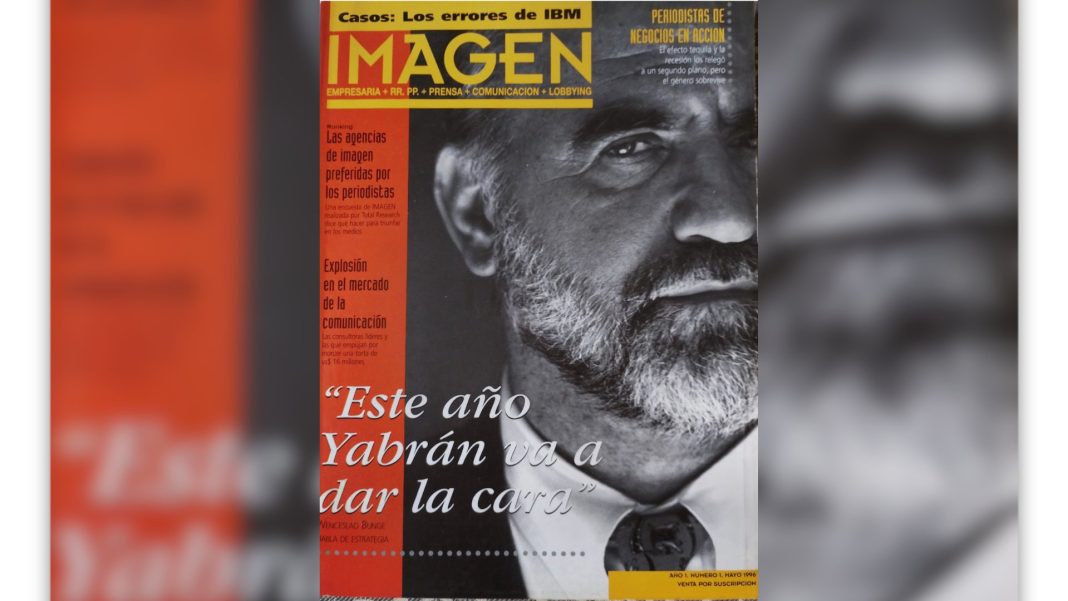

It was 1996, the topic that the emerging corporate communications market was discussing was the murder of photographer José Luis Cabezas: the perpetrators of the crime had been hitmen sent by a mobster, Alfredo Yabrán, owner of OCA and—it was believed—indirectly of all private mail services of that era.
Since the murder of the Perfil photographer, because he had dared to photograph the «mob-boss» on the beach in Pinamar and allow Argentines to see the mysterious Yabrán’s face, journalism in Argentina gained special prestige.
Yabrán was an open secret, until the then Minister of Economy, Domingo Cavallo, went to the media to denounce him as a «mob-boss» who raised Argentine business costs with his «virtual» monopoly on private mail and his «under-the-table» control of the postal workers’ union that boycotted the privatization of Correo Argentino. The inefficiency and corruption at the Post Office led businessmen in an era when email was in its infancy to depend on Yabrán’s private mail services.
Years later Franco Macri, father of who would become president in 2015, ended up buying the Post Office, but that’s another story.
The important thing is that after Cavallo’s denunciation, Yabrán—who guarded his secrecy like no one else—hired a notary public, Wenceslao Bunge, to act as his «spokesman.» He never spoke with the media nor showed his face, and that was what the cover story of the first edition of Imagen magazine was about: Bunge’s revelation, spokesman for a highly suspect individual whose voice and face were unknown, was soon going to «show his face.»
He did so in an interview with the newspaper Clarín a few days after the magazine appeared, which by then was cited even on newspaper front pages.
A year later, Yabrán’s story ended with a—alleged and ever-mythologized—suicide, when police were about to arrest him, as the intellectual author of Cabezas’s murder—cruelly murdered for merely showing his face to the public without permission.
The old-timers recall myths about doubts as to whether the body found was really Yabrán’s and that—according to the mythology—he had supposedly fled to the Middle East.
What’s relevant: from then on, Argentine journalism for years gained enormous prestige, which subsequent issues of Imagen reflected.
The media were everything—or almost everything—in the work of communicators and public relations professionals of that era. The Internet began to change that, first by allowing companies to have their own voice beyond the media. Later, social networks gave voice to all citizens and even began to set the agenda for the media.
Today, artificial intelligence is a challenge for the media, companies, and citizens: in 30 years, little more than a generation, probably no professional sector changed as much and became as complex as that of institutional communicators.
For that reason, to understand that change and the new challenges, we commemorate the 30 years of Imagen not only with a website redesign, but also with a series of interviews with sector leaders who lived through that period.
We open with Roberto Starke, probably the only one who was already Argentina’s top Public Affairs reference when the first edition of Imagen appeared with the cover of the mysterious spokesman for the mysterious mob-boss.